Urgent Kidney Specialist Appointment: When to Go.
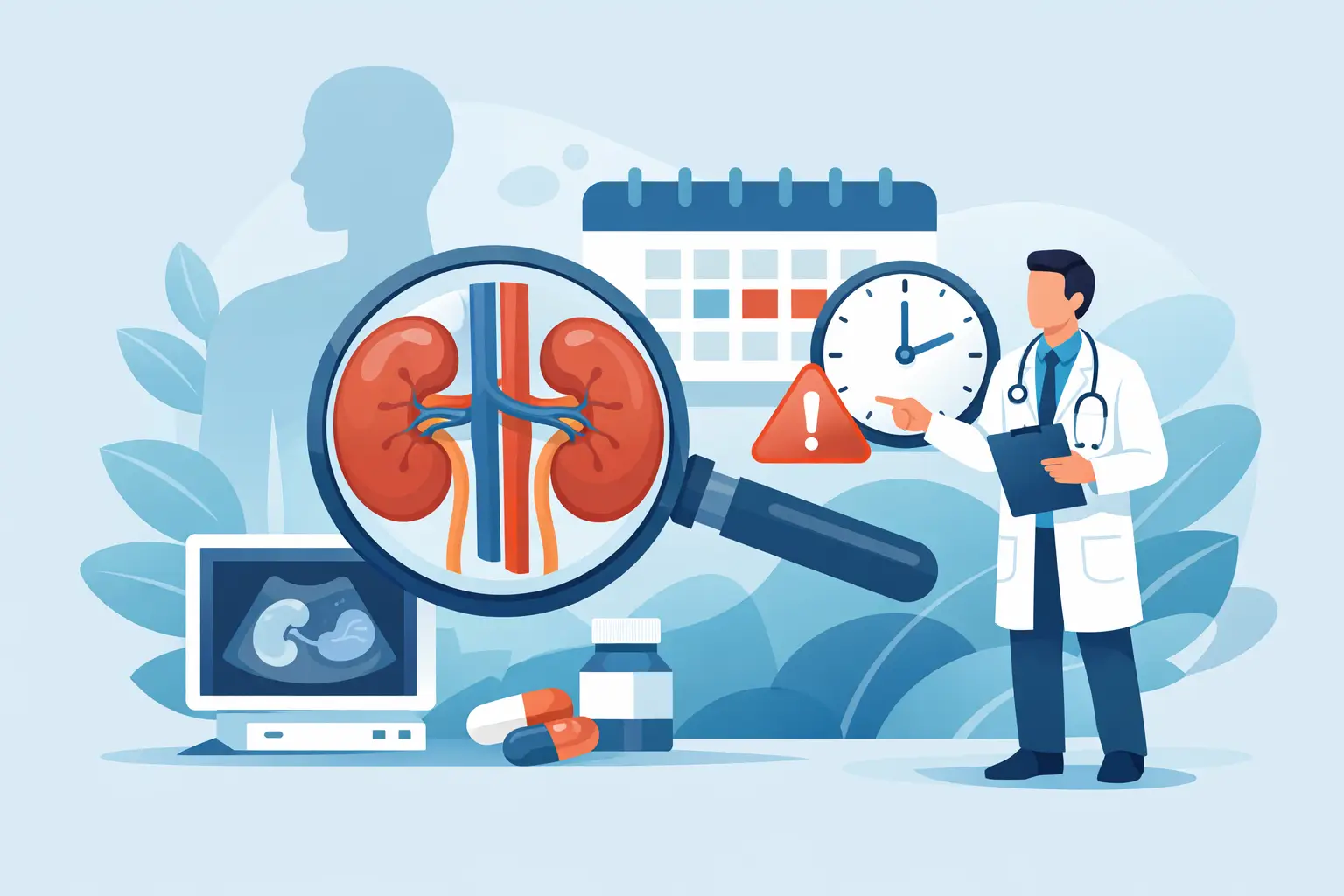
Need an urgent kidney specialist appointment? Learn warning signs, what to bring, and when fast nephrology care may prevent serious complications.
A swollen face in the morning, sudden shortness of breath, very little urine, or blood pressure that will not settle - these are not symptoms to watch for another week. An urgent kidney specialist appointment is often the point at which a reversible problem is identified before it becomes a hospital emergency. In nephrology, delays can matter. Fluid overload, acute kidney injury, severe electrolyte imbalance, and rapidly worsening chronic kidney disease can progress quickly, sometimes with few early warning signs.
When an urgent kidney specialist appointment is warranted
Kidney disease does not always present with dramatic pain. In fact, some of the most serious renal problems are initially quiet. Patients are often referred urgently because of abnormal laboratory results, not because they feel critically ill. A sudden rise in creatinine, a marked drop in estimated glomerular filtration rate, heavy protein in the urine, or potassium abnormalities may require specialist review within days rather than weeks.
The need becomes more immediate when symptoms are developing alongside those findings. Reduced urine output, leg swelling, facial puffiness, nausea, persistent vomiting, confusion, severe fatigue, visible blood in the urine, or shortness of breath may indicate declining kidney function or fluid retention. In patients with diabetes, hypertension, heart failure, lupus, recurrent kidney stones, or known chronic kidney disease, these changes deserve prompt nephrology attention.
For dialysis patients, urgency takes on an even narrower margin. Missed dialysis, access malfunction, fever during treatment, new swelling, or difficulty breathing may signal the need for immediate reassessment. For travelers already on dialysis, continuity of care is equally important. A gap in treatment scheduling, missing clinical records, or uncertainty about the prescription can turn a manageable trip into a medically unstable situation.
Symptoms that should not wait
Some situations justify an urgent kidney specialist appointment, while others require direct emergency evaluation. The distinction matters. If a patient has chest pain, severe respiratory distress, profound weakness, seizure, marked confusion, or symptoms suggestive of dangerously high potassium, emergency hospital care is the right next step. Specialist review can then be coordinated through the hospital pathway.
Short of that threshold, several presentations still deserve rapid nephrology assessment. Persistent swelling with rising blood pressure is one. Another is sudden worsening of kidney tests after dehydration, infection, contrast exposure, or a medication change. Foamy urine with edema may point to significant protein loss. Recurrent urinary abnormalities, especially blood and protein together, can indicate glomerular disease and should not be treated as a routine follow-up issue.
The same applies to patients whose primary physician has identified an urgent lab pattern. A referral marked by rising creatinine, metabolic acidosis, severe albuminuria, or declining kidney function in a pregnant patient should be handled with greater speed than a standard consult. The purpose of urgent review is not simply to confirm kidney disease. It is to determine whether intervention is needed now to prevent dialysis dependence, cardiovascular instability, or hospitalization.
What happens at an urgent kidney specialist appointment
Patients are often concerned that an urgent referral automatically means dialysis is about to begin. That is not always the case. Urgent nephrology assessment is first and foremost a diagnostic and stabilization process. The specialist will review the timeline, current symptoms, medication exposures, blood pressure pattern, fluid status, and relevant laboratory data. The central question is whether the kidney problem is acute, chronic, or acute-on-chronic, because each pathway leads to a different management plan.
A precise medication history is especially important. Nonsteroidal anti-inflammatory drugs, certain antibiotics, contrast dye exposure, herbal preparations, diuretics, and some blood pressure agents can all influence kidney function. Patients should bring all recent prescriptions and, when possible, actual medication bottles rather than relying on memory.
The consultation may also include urine testing, review of imaging, repeat blood work, and decisions about whether hospital-based management is necessary. Some patients can be treated as outpatients with close follow-up and medication adjustment. Others require direct intake for intravenous therapy, urgent dialysis planning, or inpatient monitoring. The value of specialist assessment lies in this triage function. Not every abnormal kidney test is a crisis, but some are the early stage of one.
Preparing for the visit without losing time
When urgency is involved, preparation should be efficient rather than elaborate. The most useful items are recent lab results, imaging reports, discharge summaries, dialysis records if applicable, a medication list, and a brief symptom timeline. Patients should also know whether they have had fever, vomiting, diarrhea, low blood pressure episodes, contrast studies, or recent hospital admission.
For international visitors, preparation requires an additional layer of coordination. Dialysis prescription details, vascular access information, infection screening status, dry weight, treatment schedule, and nephrologist contact information should be available before arrival whenever possible. Vacation travel is not a reason to compromise renal continuity. It simply requires structured planning under specialist oversight.
It is also helpful to arrive with realistic expectations. An urgent evaluation may lead to same-day changes in treatment, but not every question can be fully answered in one sitting. Kidney disease often requires correlation across laboratory trends, imaging, blood pressure data, and comorbid conditions. Serious care is methodical. Speed matters, but accuracy matters more.
Why timing matters in kidney care
An urgent kidney specialist appointment is not only about kidney preservation. It is also about managing the broader risks that follow renal decline. Reduced kidney function affects blood pressure control, fluid balance, acid-base status, anemia, bone-mineral metabolism, and cardiovascular stability. This is why patients sometimes feel that multiple systems are failing at once. In reality, the kidneys are deeply connected to the rest of internal medicine.
That broader view is particularly important in patients with long-standing diabetes or hypertension. By the time swelling or fatigue appears, the underlying disease may already be advanced. Early nephrology involvement can slow progression, reduce emergency admissions, and allow more orderly planning if renal replacement therapy becomes necessary. Late referral often narrows options. A patient who is seen before crisis develops is more likely to receive deliberate management rather than rescue care.
There are, however, trade-offs in urgent scheduling. Not every patient with chronic kidney disease needs an accelerated appointment, and over-triage can delay access for those who are clinically unstable. That is why referral quality matters. Clear information from the referring doctor, accurate lab data, and symptom detail help determine whether a patient should be seen urgently, routed directly to emergency intake, or scheduled in the standard pathway.
Urgent kidney specialist appointment for dialysis and access concerns
Patients on hemodialysis occupy a higher-risk category because treatment interruption can quickly lead to volume overload, electrolyte imbalance, and uremic symptoms. If a dialysis access is not functioning properly, if treatment was incomplete, or if post-dialysis symptoms are escalating, specialist review should not be postponed. An access problem is not merely a technical inconvenience. It can become a systemic clinical problem within a short interval.
The same principle applies to new patients approaching dialysis. Worsening laboratory parameters, declining appetite, uncontrolled blood pressure, severe edema, and symptomatic uremia may indicate that conservative management is no longer sufficient. The timing of dialysis initiation should be made on clinical grounds, not fear alone, but it should also not be delayed beyond the point of safety.
In Jamaica, where patients may need coordination across clinic, hospital, and dialysis settings, physician-led continuity becomes especially important. A practice such as that led by Dr. Roger N. Smith, FACP, is structured around that continuity, including specialist consultation, emergency renal intake coordination, and dialysis-related clinical oversight across multiple care environments.
When to seek emergency care instead of waiting for clinic review
Some readers may be trying to decide whether they need a fast office consultation or immediate hospital treatment. If there is severe shortness of breath, chest pain, inability to stay awake, severe confusion, no meaningful urine output, or rapid worsening in a dialysis patient who has missed treatment, do not wait for a routine office slot. The safer route is emergency assessment.
A clinic-based urgent kidney specialist appointment is appropriate when the patient is stable enough to travel, communicate, and be assessed in an organized ambulatory setting. It is not the right setting for collapse, severe respiratory compromise, or suspected life-threatening electrolyte disturbance. Sound renal care depends on matching the patient to the correct level of care at the correct time.
The most useful next step is often the simplest one: act when the warning signs are early, not when they become dramatic. In kidney medicine, timely evaluation creates options, and options are what keep serious illness from becoming irreversible.
Need Professional Advice?
Dr. Roger Smith and the team at Renal Services Limited offer specialized consultations, including clinical reviews of new therapies, at our offices in Jamaica.