10 Top Signs of Kidney Failure.
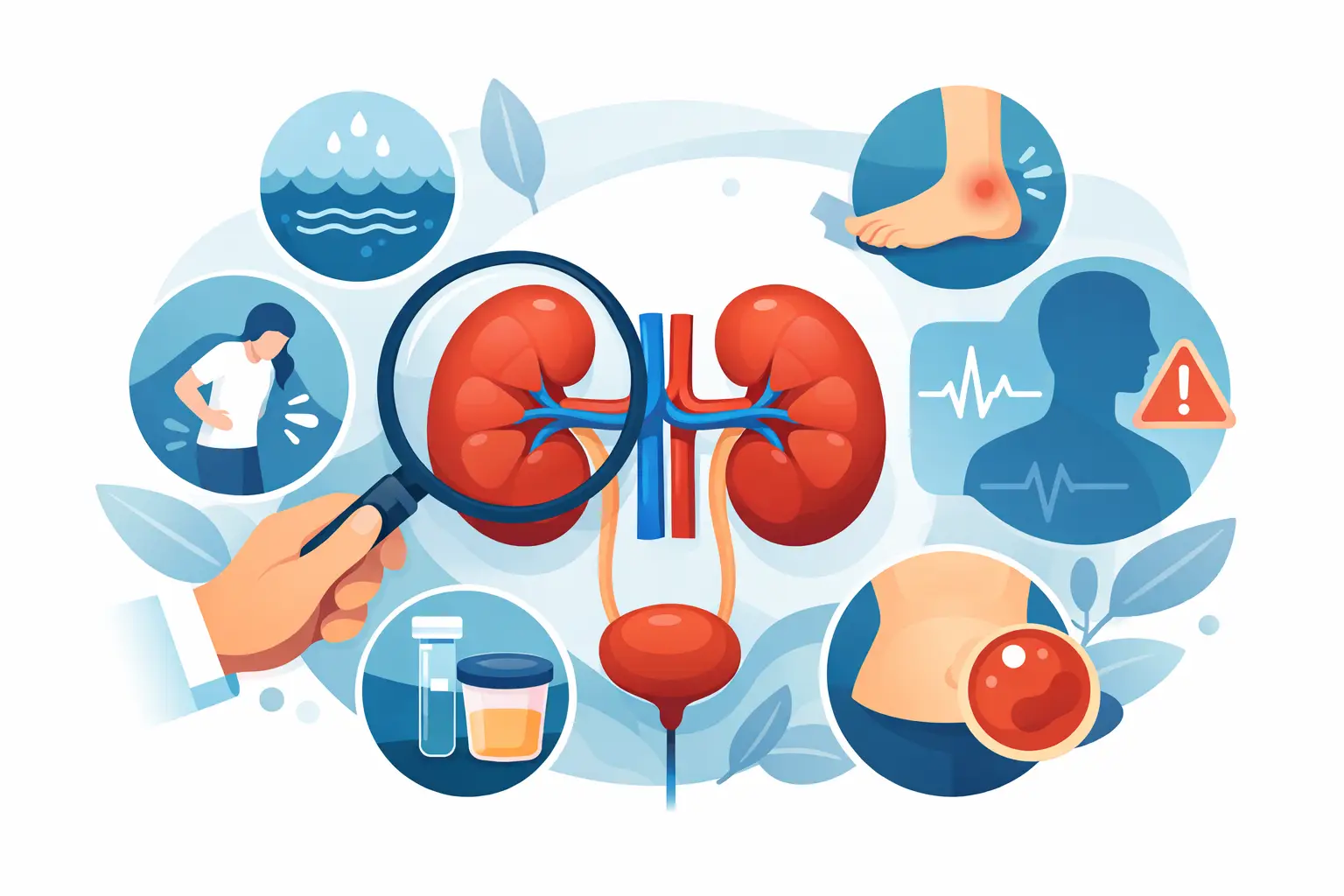
Learn the top signs of kidney failure, what they mean, and when swelling, fatigue, shortness of breath, or confusion require urgent renal care.
A patient may feel “off” for weeks before realizing the kidneys are the source of the problem. That is part of what makes the top signs of kidney failure so clinically important. Early symptoms are often mistaken for stress, dehydration, medication side effects, or routine aging, yet progressive loss of kidney function can become a medical emergency if recognition is delayed.
Kidney failure means the kidneys can no longer adequately filter waste, balance fluids, regulate electrolytes, and support blood pressure and red blood cell production. In some patients this develops gradually on a background of chronic kidney disease, diabetes, or hypertension. In others it appears more abruptly because of infection, severe dehydration, urinary obstruction, medication toxicity, or another acute illness. The warning signs overlap, but the urgency depends on the cause, the speed of decline, and the patient’s underlying health.
Top signs of kidney failure patients should not ignore
One of the most common signs is swelling, especially in the legs, ankles, feet, hands, or around the eyes. When kidney function declines, the body has more difficulty removing excess salt and water. Fluid then accumulates in the tissues. Mild swelling can have several causes, so context matters, but swelling that is new, worsening, or associated with shortness of breath deserves prompt evaluation.
Fatigue is another major warning sign. Patients often describe a level of exhaustion that feels disproportionate to their activity. This can occur because toxins build up in the bloodstream, because anemia develops as diseased kidneys produce less erythropoietin, or because electrolyte disturbances begin to affect muscle and nerve function. Fatigue by itself is not specific to renal disease, but persistent fatigue accompanied by reduced appetite, swelling, or urinary change raises concern.
Nausea, vomiting, or loss of appetite may also point to advanced kidney dysfunction. As waste products accumulate, patients may notice a metallic taste, early satiety, or aversion to food. Some develop unexplained weight loss. These symptoms are easy to dismiss as a stomach issue, but when they occur alongside declining urine output, weakness, or confusion, kidney failure must be considered.
Changes in urination remain clinically significant, although they are not always dramatic. Some patients pass less urine than usual. Others continue to make urine, even with serious kidney impairment, which is why normal urine output does not fully exclude kidney failure. Foamy urine may suggest protein loss. Blood in the urine, dark urine, nighttime urination, urinary urgency, or difficulty passing urine can all offer diagnostic clues depending on the underlying cause.
Shortness of breath is a particularly important symptom. It may result from fluid overload affecting the lungs, from severe anemia, or from metabolic acidosis in advanced kidney failure. If breathing becomes labored, especially when lying flat or with minimal exertion, this is no longer a routine office issue. It may require urgent hospital-based assessment.
Neurologic and systemic signs of kidney failure
As kidney failure progresses, the effect is not limited to swelling and urine changes. The nervous system can also be affected. Patients may become unusually drowsy, have difficulty concentrating, or appear confused. Family members sometimes notice this before the patient does. In severe uremia, mental status changes can become pronounced and indicate a dangerous level of toxin accumulation.
Muscle cramps and generalized weakness are also common. These symptoms may reflect abnormalities in potassium, calcium, sodium, or acid-base balance. High potassium deserves particular respect because it may provoke life-threatening cardiac rhythm disturbances. A patient with kidney failure may feel weak, heavy-limbed, or notice palpitations without understanding that the electrolyte problem is driving the symptoms.
Itching can become prominent in advanced disease. This is not the occasional dry-skin itch of weather change. Uremic pruritus is often persistent, diffuse, and difficult to relieve. While not always present, it can be a significant clue in patients with otherwise unexplained kidney impairment.
Chest pressure or chest pain can occur when fluid status and blood pressure are poorly controlled, or when uremia causes inflammation around the heart. This is not a symptom to monitor casually at home. Cardiac symptoms in a patient with possible kidney failure need urgent assessment because the renal and cardiovascular systems are closely linked.
Why these symptoms are often missed
The challenge is that no single symptom confirms kidney failure on its own. Swelling may be blamed on long travel or heart disease. Fatigue may be attributed to poor sleep. Nausea may be treated as a gastrointestinal complaint. Many patients with diabetes or hypertension already manage multiple medications and chronic symptoms, so a change in baseline can be easy to overlook.
There is also an important difference between chronic kidney disease and acute kidney injury. Chronic disease may progress quietly over months or years. Acute kidney injury may develop over hours to days and can worsen rapidly. Both can produce the top signs of kidney failure, but the timeline affects both treatment and prognosis. A sudden drop in urine output after vomiting, severe diarrhea, infection, contrast exposure, or use of certain pain medications needs prompt nephrology review.
Who is at highest risk
Patients with diabetes and hypertension remain at highest long-term risk, particularly when blood sugar and blood pressure are not consistently controlled. Older adults, individuals with heart failure, patients with lupus or other autoimmune disease, and those with a history of kidney stones, urinary obstruction, or recurrent infections also warrant closer attention.
Medication exposure matters as well. Nonsteroidal anti-inflammatory drugs, certain antibiotics, contrast dye, some herbal supplements, and unregulated remedies can impair kidney function, especially in a person who already has underlying chronic kidney disease. That is why medication review is a routine part of specialist nephrology assessment.
For dialysis patients and travelers requiring treatment continuity, symptom recognition becomes even more important. Missed sessions, vascular access problems, infection, excess fluid intake, or inadequate dialysis can all present with overlapping warning signs such as breathlessness, swelling, nausea, and confusion.
When symptoms require urgent care
A practical rule is this: do not wait for every symptom to appear. Urgent evaluation is appropriate when there is markedly reduced urine output, shortness of breath, severe swelling, vomiting that prevents fluid intake, chest discomfort, confusion, profound weakness, or a known history of kidney disease with sudden deterioration.
Patients should also seek prompt assessment if routine bloodwork shows a sharp rise in creatinine, if potassium is elevated, or if blood pressure becomes severely uncontrolled. In many cases the diagnosis is confirmed not by symptoms alone but by laboratory evidence, urinalysis, and imaging when obstruction is suspected.
This is where physician-led renal triage matters. In a specialist practice setting, the question is not simply whether symptoms are present. The question is whether the patient needs outpatient management, urgent medication adjustment, hospital admission, dialysis initiation, or emergency renal intake. That level of distinction requires nephrology judgment.
What evaluation usually involves
The workup commonly includes serum creatinine, blood urea nitrogen, electrolytes, bicarbonate, complete blood count, and urinalysis. Urine protein assessment is often essential. Kidney ultrasound may be used to identify obstruction, structural disease, or asymmetry. Depending on the clinical picture, additional tests may evaluate autoimmune disease, infection, paraprotein disorders, or glomerulonephritis.
Treatment depends on the cause. Some patients improve when dehydration is corrected or an offending medication is stopped. Others need blood pressure optimization, diabetic control, diuretic adjustment, relief of urinary obstruction, treatment of infection, or urgent dialysis. There is no single pathway, which is why self-diagnosis is unreliable and delay can be harmful.
At a practice such as Jamaica Dialysis, where nephrology oversight, emergency renal pathways, and dialysis coordination are integrated, the goal is to move patients quickly from symptom recognition to the right level of care. That is particularly important for high-risk local patients and for international visitors who require dependable continuity of renal treatment.
If you or a family member notices swelling, worsening fatigue, poor appetite, reduced urine output, breathlessness, confusion, or sudden decline in a known kidney patient, treat those findings with appropriate seriousness. Kidney failure often announces itself in ways that seem ordinary at first. The difference between routine symptoms and a renal emergency is timely specialist assessment.
Need Professional Guidance?
Dr. Roger Smith and the team at Renal Services Limited offer comprehensive consultations, laboratory review, and personalized kidney education programs in Jamaica.