How to Manage Chronic Kidney Disease.
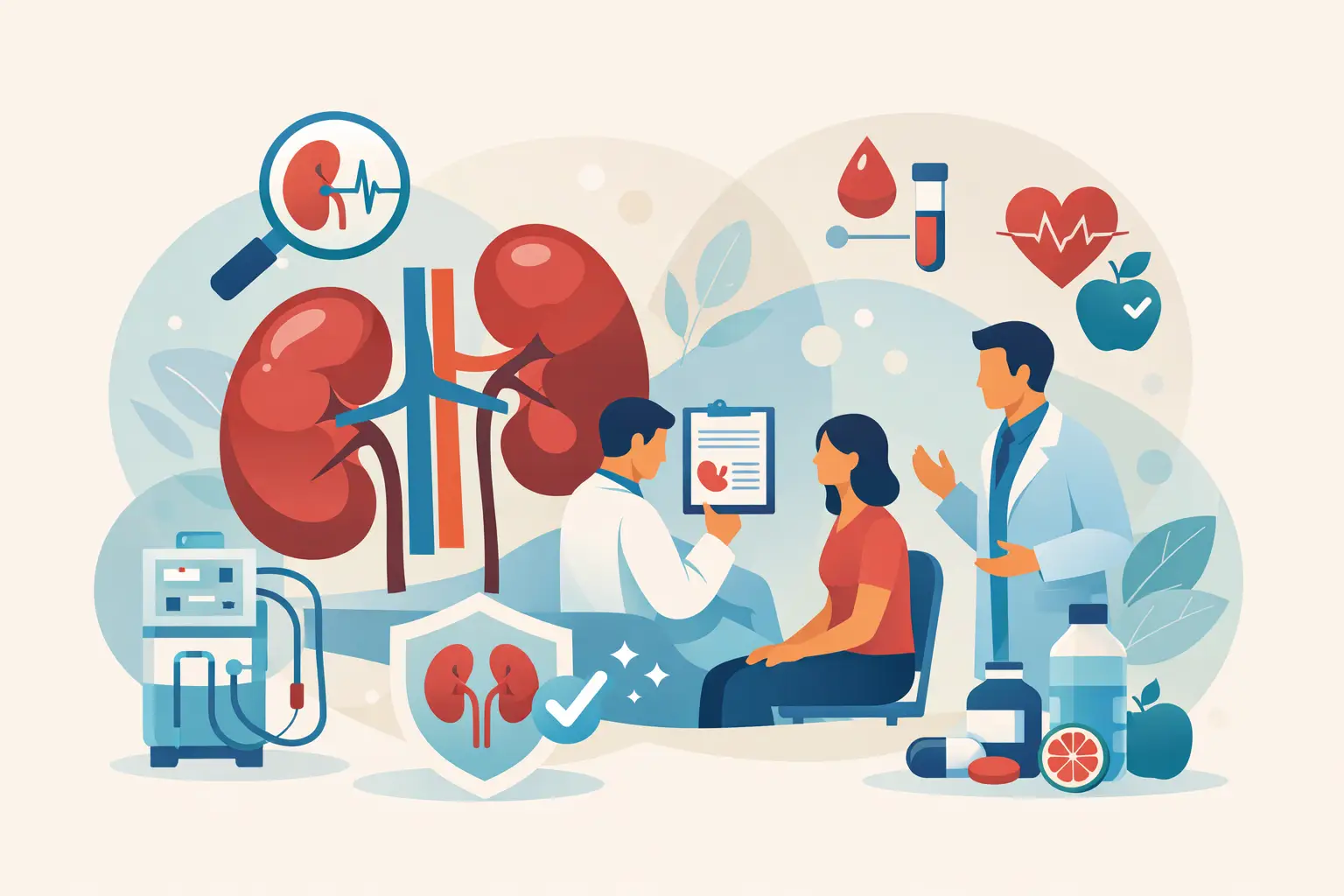
Learn how to manage chronic kidney disease with proven steps for blood pressure, diet, medications, lab monitoring, and dialysis planning.
A chronic kidney disease diagnosis changes the questions patients ask. The concern is no longer only, "What is wrong with my kidneys?" It becomes, "How do I protect the function I still have, avoid emergencies, and stay as well as possible for as long as possible?" That is the right question. Knowing how to manage chronic kidney disease means understanding that good care is not a single prescription. It is a structured, long-term plan led by careful monitoring, risk reduction, and timely nephrology oversight.
Chronic kidney disease, or CKD, is a progressive loss of kidney function over time. In many patients, the underlying drivers are diabetes, hypertension, recurrent kidney inflammation, inherited kidney disorders, or prior episodes of acute kidney injury. The kidneys do far more than make urine. They regulate fluid balance, remove metabolic waste, maintain electrolyte stability, contribute to blood pressure control, and support red blood cell production and bone health. When kidney function declines, these systems begin to destabilize gradually and then, in some cases, abruptly.
How to manage chronic kidney disease in daily practice
The first principle is simple but medically decisive: identify the cause of kidney disease and measure its stage accurately. CKD management is different for a patient with diabetic kidney disease than for a patient with polycystic kidney disease, glomerulonephritis, or longstanding hypertensive nephrosclerosis. A proper evaluation usually includes serum creatinine, estimated glomerular filtration rate, urine albumin testing, blood pressure assessment, medication review, and in many cases kidney imaging and expanded laboratory work.
Staging matters because it helps predict risk. A patient with mildly reduced kidney function and minimal protein in the urine may remain stable for years. Another patient with heavy proteinuria, uncontrolled blood pressure, and diabetes may progress much faster. This is why specialist follow-up is not a formality. It is how treatment is adjusted before complications become severe.
Blood pressure control is one of the strongest interventions available. In CKD, elevated blood pressure is both a cause and a consequence of kidney damage. If it is not tightly managed, kidney decline often accelerates. Many patients require more than one medication, and drugs such as ACE inhibitors or ARBs are often used because they can reduce intraglomerular pressure and lower urinary protein loss. These medications are not appropriate in every scenario, and they must be monitored carefully, especially when potassium rises or kidney function shifts after initiation.
Diabetes management is equally central. High blood glucose injures the small blood vessels in the kidneys and can steadily worsen albuminuria and filtration loss. Tight glucose control lowers risk, but the target must be individualized. A younger patient with early CKD may benefit from a stricter plan, while an older patient with multiple comorbidities may need a safer, less aggressive approach to avoid hypoglycemia. The correct answer is often not the same for every patient.
Nutrition is part of how to manage chronic kidney disease
Dietary advice in CKD should be specific, not generic. Many patients are told simply to "eat better," which is not enough. The kidney diet depends on disease stage, laboratory values, fluid status, and whether dialysis is required. Protein intake is a common example. In non-dialysis CKD, excessive protein may increase kidney workload and worsen uremic symptoms over time. Yet severe protein restriction can contribute to malnutrition, especially in older adults. The goal is balance, not guesswork.
Sodium restriction is usually necessary because excess salt can worsen hypertension, swelling, and shortness of breath. This is particularly important in patients with edema or heart failure. Potassium and phosphorus intake may also need adjustment, but not every patient with CKD needs the same restrictions. Some patients have normal potassium levels for years. Others develop dangerous hyperkalemia early, especially if they are taking certain blood pressure medicines or have advanced disease.
Fluid advice also depends on the clinical picture. A patient with significant swelling or reduced urine output may need limits. A patient with earlier-stage CKD and stable volume status may not. This is why a renal nutrition plan works best when tied to current labs rather than internet diet rules.
Medication safety is another major issue. CKD changes how the body handles many drugs, and common medications can become harmful when kidney function declines. Nonsteroidal anti-inflammatory drugs such as ibuprofen and naproxen are especially problematic because they can reduce kidney blood flow and precipitate further injury. Dose adjustments may be required for antibiotics, diabetes medications, gout treatments, and many other agents. Contrast studies, herbal supplements, and over-the-counter remedies should also be reviewed with a physician because patients often underestimate their renal risk.
Monitoring complications before they become urgent
One of the most important parts of CKD care is tracking complications early. Declining kidney function may lead to anemia, metabolic acidosis, mineral and bone disorder, hyperkalemia, and fluid overload. These are not minor laboratory findings. They directly affect fatigue, muscle function, cardiac rhythm, bone strength, and hospital risk.
Anemia in CKD often develops because the kidneys produce less erythropoietin, the hormone that stimulates red blood cell production. Some patients also have iron deficiency. Treatment may include iron replacement and, in selected cases, erythropoiesis-stimulating therapy. The correct plan depends on severity, iron studies, symptoms, and overall risk profile.
Bone and mineral disorder in CKD is more complex than many patients realize. As kidney function falls, phosphorus regulation, vitamin D metabolism, and parathyroid hormone balance begin to shift. If this is ignored, the result may be bone pain, fractures, vascular calcification, and worsening systemic disease. Monitoring calcium, phosphorus, bicarbonate, parathyroid hormone, and vitamin D is therefore part of high-level kidney care, not an optional extra.
Patients should also understand warning signs that require urgent review. Rapid weight gain, worsening leg swelling, persistent vomiting, severe weakness, reduced urine output, shortness of breath, confusion, or chest symptoms should never be dismissed. In advanced CKD, deterioration can happen quickly, and emergency renal intake pathways can prevent a dangerous delay in treatment.
Preparing early for advanced kidney disease
A common mistake in CKD management is waiting too long to plan for renal replacement therapy. Not every patient with CKD will need dialysis, and some remain stable for prolonged periods. However, when progression is clear, preparation should begin before an emergency occurs.
That preparation includes repeated assessment of kidney trajectory, discussion of dialysis options, and planning for vascular access when hemodialysis is likely. Starting dialysis through a temporary emergency catheter is often less desirable than beginning with a well-planned permanent access pathway. Early planning usually improves safety and reduces avoidable hospital admissions.
Patients who travel should think about this even sooner. Dialysis continuity cannot be improvised at the last minute. If a patient on maintenance dialysis plans to visit Jamaica, coordination should include treatment records, schedule confirmation, vascular access details, infection status, medication list, and consultant-level oversight at the receiving facility. In that setting, logistics are part of clinical care.
At practices such as Jamaica Dialysis, physician-led coordination across consultation, hospital nephrology, and dialysis services can be particularly valuable for patients whose needs cross outpatient and urgent care settings. For CKD patients, continuity matters. Fragmented care leads to missed trends, repeated testing, and delayed decisions.
The role of the nephrologist in long-term CKD management
Primary care physicians are essential in identifying hypertension, diabetes, and early kidney risk, but progressive CKD often requires specialist involvement. A nephrologist does more than confirm the diagnosis. The specialist helps define the cause, interpret the pattern of decline, manage difficult blood pressure and electrolyte problems, determine when kidney biopsy or imaging is needed, and coordinate dialysis planning when appropriate.
This is particularly important when kidney disease is accompanied by resistant hypertension, heavy proteinuria, recurrent fluid overload, unexplained lab abnormalities, or a rapid fall in estimated GFR. Patients with these features should not rely on watchful waiting alone.
How to manage chronic kidney disease well also means understanding what treatment cannot do. In many cases, CKD cannot be reversed. The goal is to slow progression, prevent complications, preserve quality of life, and intervene early when the clinical course changes. That may sound modest, but in nephrology it is often the difference between stable outpatient care and repeated hospitalization.
Patients do best when they know their numbers, keep appointments, bring an updated medication list, and report changes in swelling, urination, blood pressure, appetite, and energy. Kidney disease management is a partnership, but it must be guided by a precise medical framework.
The most useful next step is rarely dramatic. It is usually a properly timed consultation, a medication adjustment, a lab review, or a treatment plan refined before the kidneys are under acute strain. That is how kidney function is protected - not through guesswork, but through steady, specialist-led care.
Need Professional Guidance?
Dr. Roger Smith and the team at Renal Services Limited offer comprehensive consultations, laboratory review, and personalized kidney education programs in Jamaica.