How Hypertension and Kidney Damage Connect.
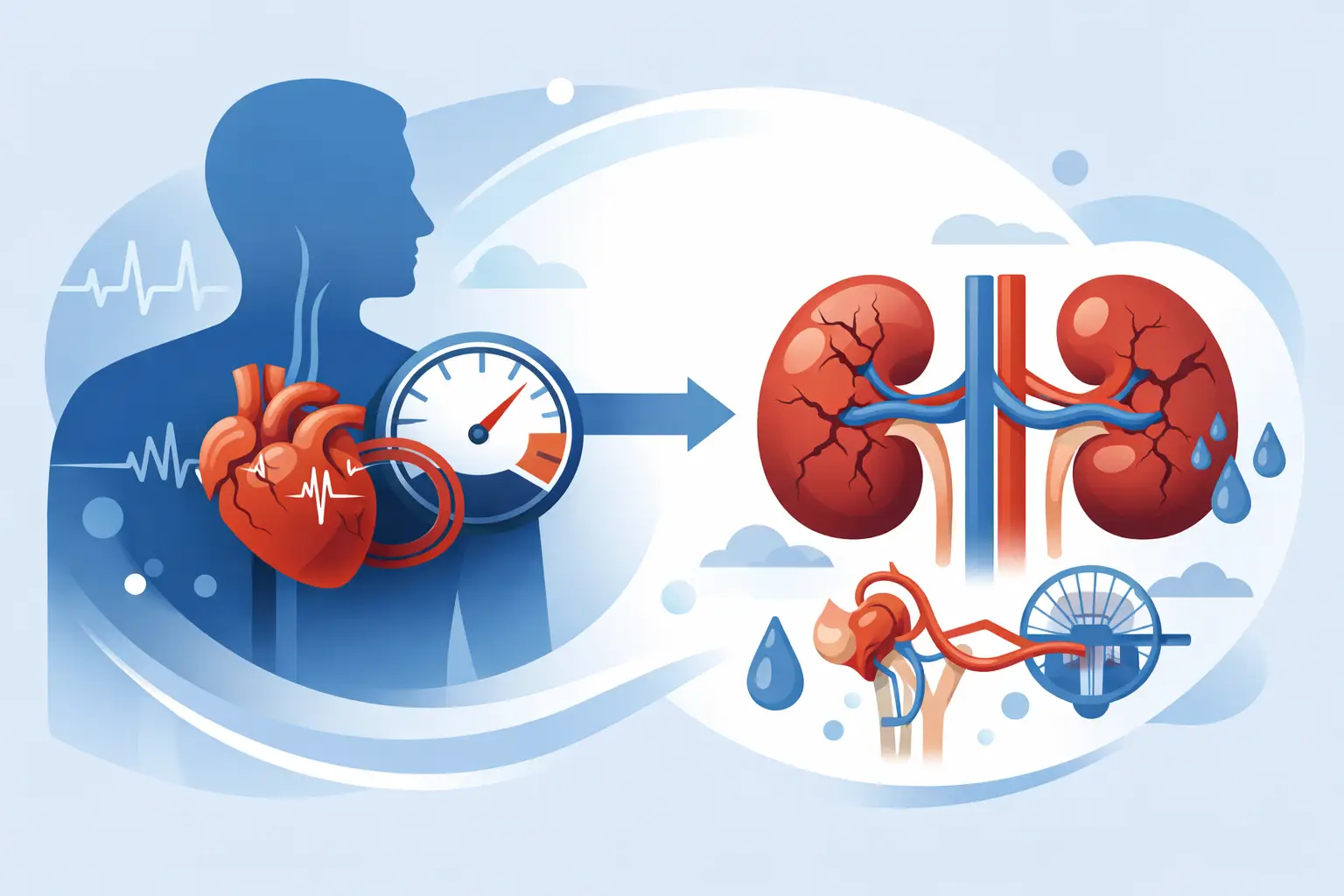
Learn how hypertension and kidney damage are linked, which warning signs matter, and when specialist nephrology care is needed to protect function.
A patient may feel well for years while blood pressure quietly injures the kidneys. That is one reason hypertension and kidney damage so often appear together in nephrology practice. By the time swelling, fatigue, abnormal laboratory results, or reduced urine output become obvious, meaningful loss of kidney function may already have occurred.
This is not a minor association. High blood pressure is both a cause and a consequence of chronic kidney disease. Once that cycle begins, control becomes more difficult, cardiovascular risk rises, and the likelihood of dialysis or hospitalization increases. Early recognition matters because kidney injury from hypertension can sometimes be slowed substantially when treatment is timely, structured, and supervised at specialist level.
Why hypertension and kidney damage are so closely linked
The kidneys filter blood through a dense network of very small blood vessels. Those vessels are designed to handle steady flow, not persistent excess pressure. When blood pressure stays elevated, the vessel walls thicken and narrow over time. That reduces blood supply to delicate filtering units called glomeruli and leads to scarring within the kidney tissue.
As scarring progresses, the kidneys become less effective at removing waste, balancing electrolytes, and regulating fluid status. They also lose some of their ability to help control blood pressure through hormonal pathways. This is where the relationship becomes bidirectional. Hypertension damages the kidneys, and damaged kidneys then drive blood pressure even higher.
For some patients, this process develops gradually over many years. For others, especially those with diabetes, vascular disease, obesity, or a family history of kidney failure, progression can be faster. The degree of blood pressure elevation matters, but so does duration. Even moderately uncontrolled readings can become dangerous when sustained for a long period.
What high blood pressure does inside the kidney
In clinical terms, long-standing hypertension can produce nephrosclerosis. This means hardening and scarring of renal blood vessels and tissue. Patients do not feel nephrosclerosis developing. It is usually detected through elevated creatinine, reduced estimated glomerular filtration rate, or protein in the urine.
Protein in the urine deserves particular attention. Healthy kidneys normally keep protein in the bloodstream. When the filtering barrier is injured, albumin and other proteins leak into the urine. That leak is not just a marker of damage. It also signals a higher risk of future kidney decline and cardiovascular events.
The pattern is not identical in every patient. Some people present with slowly progressive chronic kidney disease. Others come to medical attention during a hypertensive emergency, where severely elevated blood pressure causes acute injury to the kidneys, brain, heart, or eyes. In that setting, treatment must be immediate and carefully monitored, because blood pressure should be lowered safely rather than abruptly.
Who is at highest risk
Not every person with hypertension develops advanced renal disease, but some groups require closer surveillance. Risk is higher in patients with diabetes, prior stroke, heart failure, known vascular disease, recurrent uncontrolled blood pressure, or a family history of kidney disease. Older adults are also vulnerable, although younger patients with severe hypertension should never be reassured too quickly.
Race and genetic background can influence risk as well. In populations with a high burden of hypertension and diabetes, chronic kidney disease often appears earlier and progresses more aggressively when treatment is delayed. Access to regular specialist care, medication adherence, and timely laboratory monitoring make a major difference.
There is also an important practical point: many patients assume that if they are urinating normally, the kidneys must be fine. That is not reliable. Kidney disease can advance significantly before urine volume changes.
Signs that suggest kidney involvement
Early kidney damage is often silent, which is why screening matters. When symptoms do occur, they may be subtle at first. A patient may notice swelling in the ankles, foamy urine, fatigue, reduced exercise tolerance, headaches, or worsening blood pressure control despite medication.
More advanced disease can lead to nausea, poor appetite, itching, shortness of breath from fluid overload, muscle cramps, or disturbed sleep. These are not symptoms to monitor casually. They warrant formal assessment, especially in a patient with established hypertension.
Laboratory and clinical findings are usually more informative than symptoms alone. A nephrology evaluation often focuses on serum creatinine, estimated glomerular filtration rate, urine albumin, electrolyte balance, hemoglobin, and imaging where indicated. The goal is not simply to confirm that damage exists, but to define severity, likely cause, and the speed of progression.
How specialists evaluate hypertension and kidney damage
A proper workup goes beyond a single office blood pressure reading. Blood pressure should be assessed carefully, with attention to technique, home readings when available, and the pattern over time. Kidney disease staging depends on both filtration rate and albuminuria, not one number in isolation.
Specialists also look for contributors that complicate management. These include diabetic kidney disease, renovascular disease, obstructive uropathy, medication-related injury, and high-risk states such as heart failure or volume overload. Sometimes difficult blood pressure control reflects excess salt intake or missed medication doses. Sometimes it reflects a secondary medical cause that needs targeted treatment.
This is where disciplined nephrology oversight is particularly valuable. The objective is to separate routine hypertension from hypertension that is already affecting renal structure and function, and then to build a treatment plan that is medically precise rather than generic.
Treatment goals when the kidneys are at risk
The central goal is to reduce ongoing kidney injury while lowering cardiovascular risk. That usually requires more than one intervention. Blood pressure targets must be individualized, but in chronic kidney disease, tighter control is often appropriate when it can be achieved safely.
Medication selection matters. Agents that block the renin-angiotensin-aldosterone system are often used because they can lower pressure within the kidney's filtering units and reduce proteinuria. Diuretics may be necessary when fluid retention contributes to hypertension. Additional medications are frequently required, since many patients with chronic kidney disease need combination therapy rather than a single drug.
There are trade-offs. Some medications that protect kidney function in the long term may cause a small short-term rise in creatinine or alter potassium levels. That does not automatically mean the drug is wrong. It means the patient needs monitoring by a clinician who understands renal physiology and knows when a change is expected, when it is acceptable, and when it signals danger.
Dietary sodium restriction is also fundamental. A medication plan is less effective if salt intake remains high. Fluid management, diabetes control, weight reduction, treatment of sleep apnea where relevant, and avoidance of nephrotoxic drugs such as certain pain medications can all help preserve function.
When hypertension becomes an emergency
There are situations where elevated blood pressure and kidney injury require urgent evaluation, not routine follow-up. Severe blood pressure elevation with chest pain, neurologic symptoms, shortness of breath, sudden decline in urine output, confusion, or rapidly worsening swelling may indicate a hypertensive emergency or acute kidney injury.
Patients with advanced chronic kidney disease can deteriorate quickly in this setting. Intravenous therapy, cardiac monitoring, repeated laboratory testing, and hospital-level assessment may be required. For some, emergency dialysis becomes part of the management pathway if fluid overload, dangerous potassium elevation, or severe uremia develops.
This is why delayed care is risky. A patient who has been told for years that their pressure is "a little high" may still arrive with advanced kidney failure if the condition was not managed aggressively enough.
Why follow-up must be structured
One of the common failures in renal care is fragmented follow-up. A patient receives treatment in an emergency setting, blood pressure improves briefly, and then long-term coordination is lost. Kidney disease does not respond well to that pattern.
Structured follow-up means repeat blood pressure review, medication adjustment, laboratory monitoring, and reassessment of urine protein at appropriate intervals. It also means planning ahead if kidney function continues to decline. Some patients need education about chronic kidney disease staging. Others need preparation for dialysis access, hospital intake pathways, or travel planning if they require treatment away from home.
In a specialist setting, the advantage is continuity. The same physician-led standard can be applied across consultation, dialysis coordination, urgent renal assessment, and ongoing chronic disease management. For patients in Jamaica, that level of coordination is central to safe care, particularly when hypertension coexists with diabetes, cardiovascular disease, or established renal impairment.
The patient question that matters most
Most patients eventually ask a direct question: can the damage be reversed? The honest answer is that it depends on the stage and the cause. Acute injury may improve, especially if treated quickly. Chronic scarring is usually not fully reversible. What can often be changed is the rate of decline.
That distinction is clinically important. Slowing progression may preserve kidney function for years, reduce hospital admissions, delay dialysis, and lower the risk of heart attack or stroke. Those are meaningful outcomes, and they are achievable more often than many patients realize.
If you have hypertension, abnormal kidney blood tests, protein in the urine, or swelling that has not been fully evaluated, do not wait for symptoms to become dramatic. The kidneys often ask for attention quietly, and they respond best when care begins before the warning signs become irreversible.
Need Professional Advice?
Dr. Roger Smith and the team at Renal Services Limited offer specialized consultations, including clinical reviews of new therapies, at our offices in Jamaica.