Diabetes Kidney Disease Symptoms to Watch.
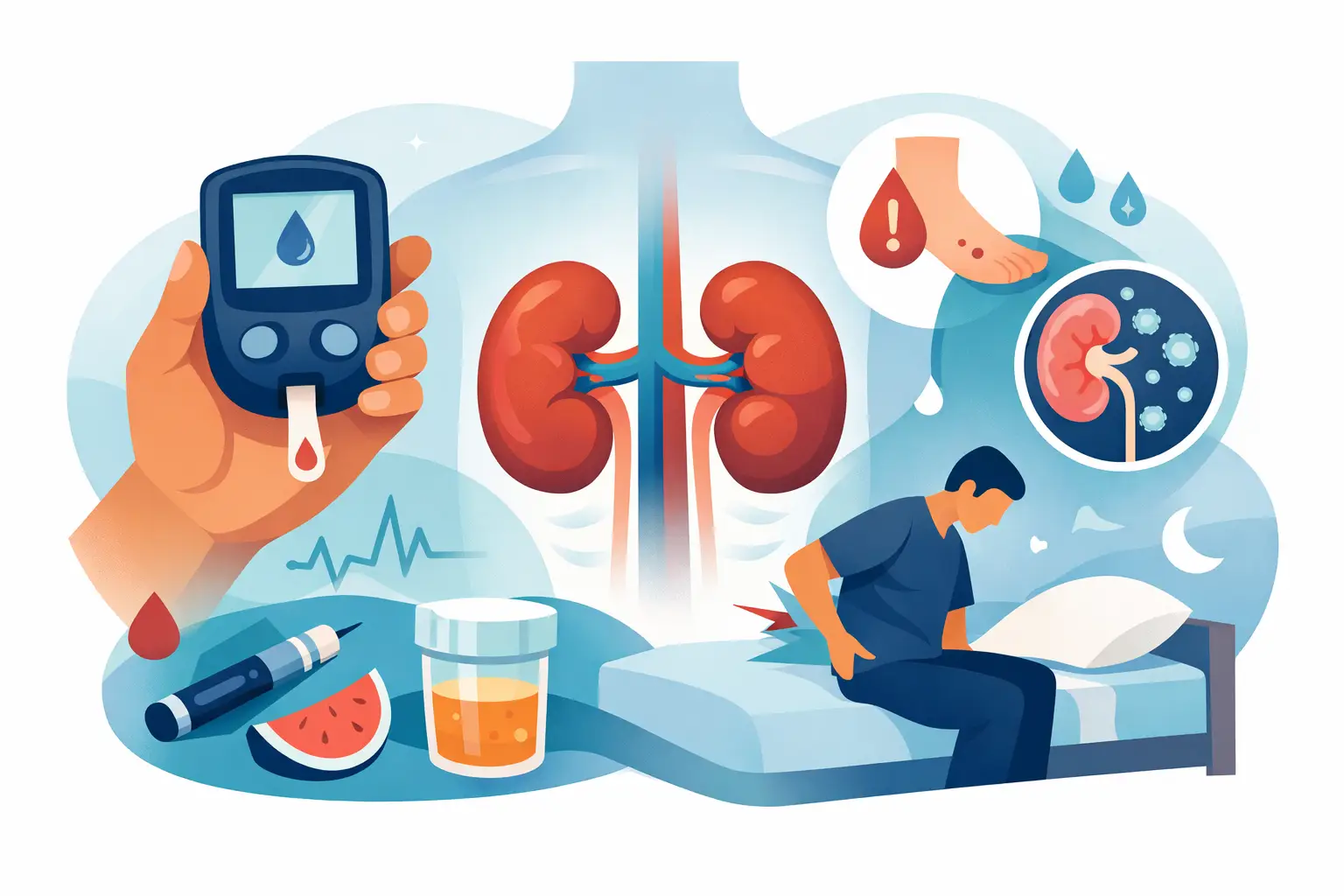
Learn which diabetes kidney disease symptoms matter, why they appear late, and when swelling, fatigue, or urine changes require specialist care.
A patient may feel reasonably well, notice a little ankle swelling at night, and assume it is age, diet, or standing too long. In diabetic kidney disease, that assumption can delay care. Diabetes kidney disease symptoms often appear late, after kidney function has already declined, which is why subtle changes deserve serious attention.
Diabetic kidney disease, also called diabetic nephropathy, is one of the most common causes of chronic kidney disease. It develops when persistently elevated blood glucose damages the kidney's filtering units and small blood vessels over time. The process is usually gradual. Early injury may produce no clear symptoms at all, even while laboratory testing already shows protein in the urine or a falling estimated glomerular filtration rate, known as eGFR.
That is the central challenge for patients and families. Symptoms are useful, but they are not an early-warning system in every case. A person with long-standing diabetes, high blood pressure, or both can have significant kidney involvement before feeling unwell. For that reason, symptom awareness must be paired with regular medical surveillance.
Why diabetes-related kidney disease is easy to miss
The kidneys are remarkably adaptive organs. They continue to filter blood and regulate fluid, electrolytes, and acid-base balance despite ongoing injury. This reserve can conceal disease for months or years. By the time fatigue, swelling, appetite loss, or abnormal urination becomes obvious, the kidneys may already be under considerable strain.
There is another layer of complexity. Some symptoms overlap with diabetes itself, heart disease, anemia, medication effects, or simple dehydration. Frequent urination, for example, can occur with high blood glucose as well as kidney disease. Swelling may reflect kidney dysfunction, but it can also relate to heart failure or venous disease. That is why interpretation matters. The symptom does not stand alone - it must be assessed in the full clinical picture.
Common diabetes kidney disease symptoms
Swelling in the feet, ankles, legs, or around the eyes
Fluid retention is one of the more recognizable signs of kidney dysfunction. When the kidneys lose the ability to regulate salt and water properly, swelling can develop in the lower limbs or, in some cases, around the eyes. Shoes may feel tighter by evening, or socks may leave deeper marks than usual.
This can also occur when significant protein is leaking into the urine. Protein loss reduces the blood's ability to hold fluid within the circulation, which can contribute to puffiness and edema. Not every swollen ankle points to kidney disease, but in a patient with diabetes, it should not be dismissed.
Changes in urination
Urine changes deserve attention, especially when they are new or progressive. A patient may notice foamy urine, which can suggest excess protein loss. Others may urinate more often at night, pass smaller amounts than expected, or feel that their urine pattern has changed without an obvious explanation.
Blood in the urine is less typical of diabetic nephropathy by itself and may suggest another problem such as infection, stone disease, or a different kidney disorder. That distinction is clinically important. Not every kidney problem in a person with diabetes is caused by diabetes.
Fatigue and reduced exercise tolerance
As kidney function declines, fatigue becomes common. This happens for several reasons. Waste products can accumulate, anemia may develop because damaged kidneys produce less erythropoietin, and sleep may be disrupted by nighttime urination or itching.
Patients often describe this as more than ordinary tiredness. They may feel slowed down, weak, or unable to complete routine activity with their usual stamina. In someone with diabetes, especially if blood sugar is reasonably controlled yet fatigue is worsening, kidney evaluation becomes more urgent.
Nausea, poor appetite, or a metallic taste
Advanced kidney dysfunction can affect the gastrointestinal system. Patients may report nausea, a reduced desire to eat, early fullness, or an unpleasant taste in the mouth. Some begin eating less without trying and then lose weight.
These symptoms usually do not appear at the earliest stages. When they do occur, they suggest that uremic toxins may be accumulating. This is not a symptom cluster to monitor casually at home. It requires prompt medical review.
Itching and dry skin
Persistent itching can occur as chronic kidney disease progresses. The mechanism is multifactorial and may involve mineral imbalance, inflammation, and metabolic changes. Dry skin alone is common and nonspecific, but when itching becomes generalized and persistent in a patient with diabetic kidney disease, it deserves investigation.
Shortness of breath
Shortness of breath may develop if fluid accumulates or if anemia becomes significant. This symptom requires particular caution because it can also indicate cardiac disease, pulmonary disease, or acute fluid overload. In practical terms, if a person with diabetes and known or suspected kidney disease becomes breathless at rest, while lying flat, or with minimal activity, that is a medical priority.
Symptoms that suggest more advanced disease
There is no single moment when mild kidney disease becomes severe. Progression is measured through laboratory data, blood pressure control, urine protein levels, and overall clinical status. Still, certain symptoms raise concern that kidney function may be substantially impaired.
These include persistent swelling, marked fatigue, loss of appetite, nausea, difficulty concentrating, muscle cramps, and breathlessness. Some patients also notice restless sleep or a sense of mental fog. When these features cluster together, the issue is not simply symptom relief. It is assessment of kidney function, complications, and whether urgent intervention is required.
When symptoms are absent but disease is present
This is one of the most important points in any discussion of diabetes kidney disease symptoms. Many patients have no symptoms during the period when treatment can do the most to slow progression. A urine albumin test may show abnormal protein leakage while the patient feels entirely normal. Serum creatinine may rise gradually. Blood pressure may become harder to control. None of this is reliably felt.
For that reason, adults with diabetes should not wait for symptoms before asking whether their kidneys have been checked. Routine surveillance generally includes blood pressure measurement, blood testing for kidney function, and urine testing for albumin or protein. Patients with hypertension, long-standing diabetes, retinopathy, or a family history of kidney disease warrant especially careful follow-up.
What makes diabetic kidney symptoms worse
Several factors accelerate injury or make symptoms more likely. Poor glucose control is a major driver, but it is not the only one. Uncontrolled blood pressure is equally important and, in many cases, more immediately damaging to the kidneys. High dietary sodium intake can aggravate swelling and hypertension. Certain pain medications, especially frequent nonsteroidal anti-inflammatory drug use, may worsen kidney function.
Infection, dehydration, heart failure, and urinary obstruction can also produce a sudden decline on top of chronic disease. This is why a patient who has been stable for months may suddenly feel unwell. The change may reflect not only diabetic nephropathy, but an acute complication superimposed on it.
When to seek specialist evaluation
A nephrology review is appropriate when diabetes is accompanied by protein in the urine, declining eGFR, resistant hypertension, unexplained swelling, or symptoms suggesting progressive chronic kidney disease. Specialist assessment is also important when the clinical picture does not fit straightforward diabetic nephropathy.
For example, rapid loss of kidney function, visible blood in the urine, severe protein loss early in diabetes, or abnormal urine findings may point to another kidney disorder. That matters because treatment and prognosis can differ significantly. A disciplined diagnostic approach avoids false reassurance.
Patients should seek urgent medical attention if they develop severe shortness of breath, chest discomfort, confusion, profound weakness, persistent vomiting, sharply reduced urine output, or rapidly worsening swelling. Those features may indicate advanced kidney failure, acute kidney injury, or fluid overload requiring immediate intervention.
What patients can do now
The practical next step is not self-diagnosis. It is structured evaluation. If you have diabetes and have noticed swelling, foamy urine, unusual fatigue, appetite loss, or changes in urination, arrange medical review and kidney testing rather than waiting to see whether symptoms settle on their own.
Good care is rarely based on one symptom in isolation. It depends on trend data, medication review, blood pressure control, urine findings, and a realistic understanding of risk. In specialist nephrology practice, the goal is not only to identify established kidney disease, but to detect progression early enough to preserve function and avoid emergency pathways.
At Jamaica Dialysis and specialist nephrology clinics under physician-led oversight, that principle remains central: clear assessment, timely intervention, and careful coordination when kidney disease intersects with diabetes.
If you live with diabetes, the most useful mindset is a disciplined one. Do not wait for dramatic warning signs. The kidneys often ask for attention quietly, and they are best protected when those quieter signals are taken seriously.
Need Professional Advice?
Dr. Roger Smith and the team at Renal Services Limited offer specialized consultations, including clinical reviews of new therapies, at our offices in Jamaica.